

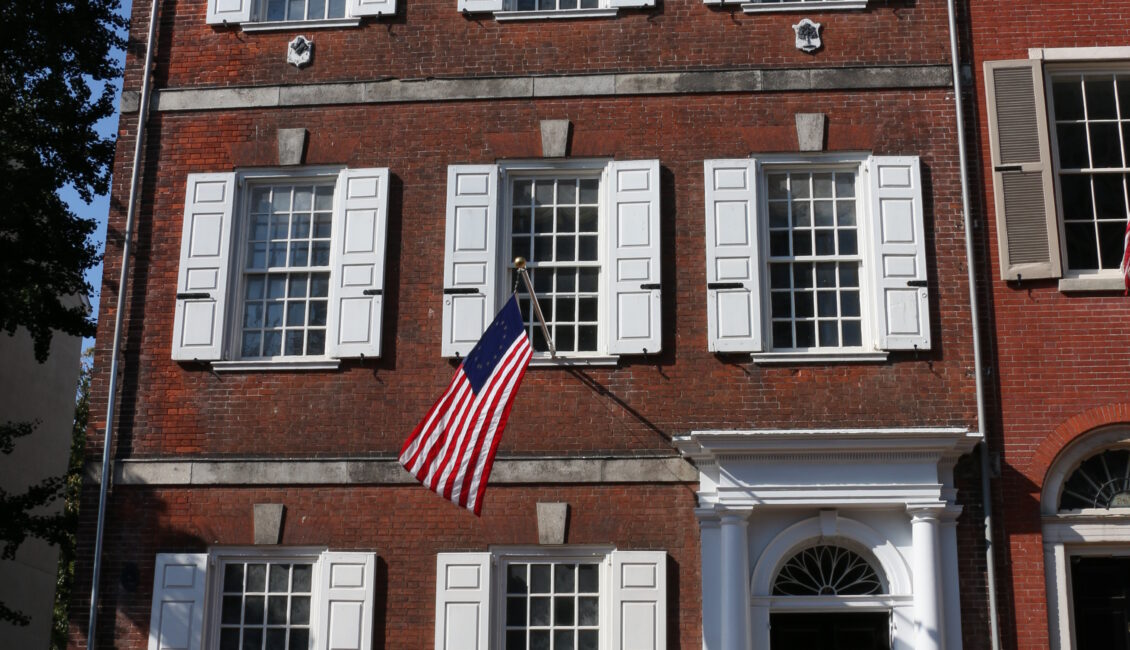
Visitors will learn about the Powels through a self guided tour of the house, which is the only 18th century building left on the block.
Built in 1765, the three-bay, red-brick Powel House is considered one of the finest examples of Georgian architecture in the United States.
In 1769, Samuel Powel purchased this newly built house from the merchant and land speculator Charles Stedman. As newlyweds, he and his new bride, Elizabeth Willing Powel, immediately began redesigning the house’s interior. The Powels hired Philadelphia’s leading carvers and craftsmen to decorate the house’s principal rooms. James Claw created the elaborate Rococo design of the carved ceilings in the ballroom. Hercules Courtenay carved the exquisite ornamental mantel, along with the cornices, paneling and baseboards. Nicholas Bernard and Martin Jugiez carved the stunning mahogany staircase.
Samuel Powel is often called the “Patriot Mayor,” serving as the last mayor under the British Crown and the first mayor in our new American republic. Powel was not only a real estate mogul, land investor, merchant, politician, and trustee, but he was among the richest men in Philadelphia.
His wife Elizabeth Willing Powel was an equally seminal figure in our country’s founding. She not only lavishly entertained the political elite during the drafting of the Declaration of Independence and the Constitution, but she was also educated, smart, and had a powerful, opinionated voice. Elizabeth Powel became one of George Washington’s closest confidants, before, during and after his Presidency.
In the late 19th century, the Powel House stood witness as the “Old City” neighborhood was industrialized. The property’s newest owner (1904) Wolf Klebanksy was using the house for warehousing his horsehair and bristle business. By 1931, the Powel House had deteriorated significantly and faced its greatest risk — demolition to make way for a parking lot.
The fact that “this was the house where George Washington danced” became the rallying cry, inspiring PhilaLandmarks’ Founder Frances Anne Wister to corral her wealthy friends to purchase this historic house and save it from destruction.